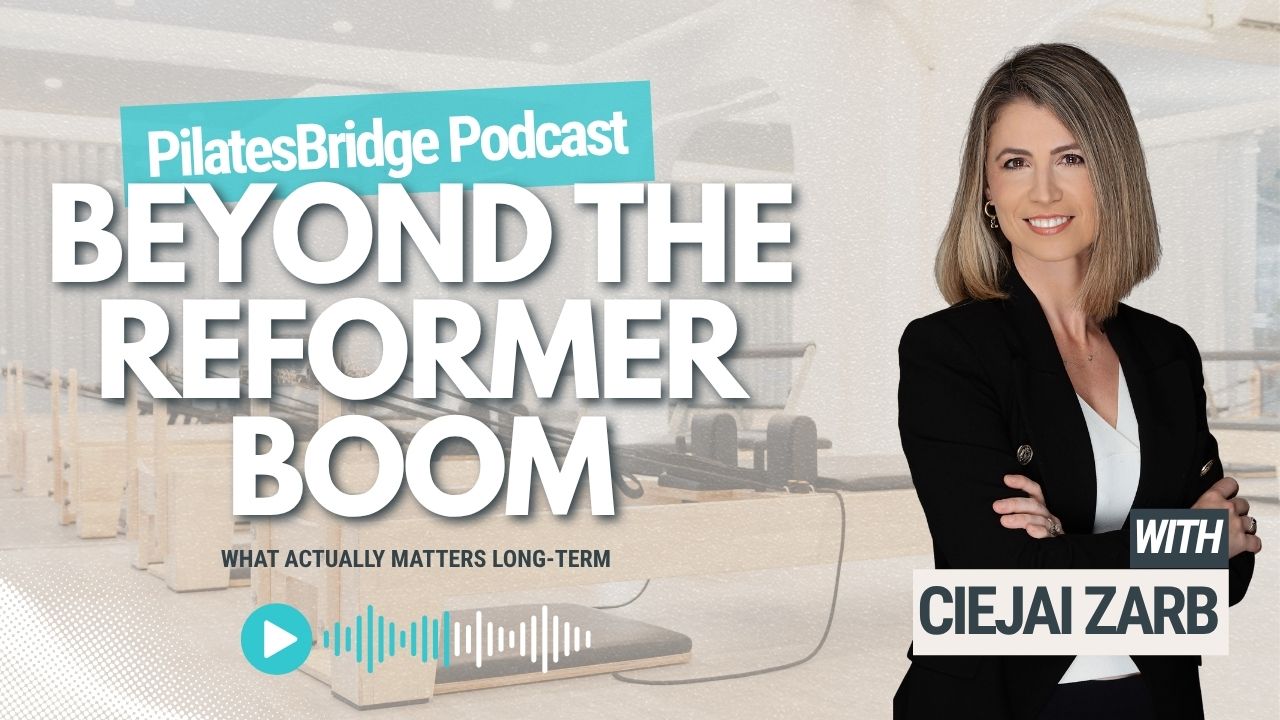

Pilates is no longer niche.
A few years ago, many studio owners were still explaining what Pilates was. Today, reformer studios are opening on nearly every corner, celebrities are posting their workouts online, and consumers are more aware of Pilates than ever before. The growth is undeniable. But the real question isn’t whether Pilates is growing. It’s what happens next.
The reformer boom brought enormous visibility to Pilates. More people are experiencing Pilates for the first time, and the method has officially entered mainstream wellness. But the equipment alone doesn’t build longevity. What matters is the experience, the education, and the outcomes surrounding it.
And that shift is already happening.
In this conversation with Ciejai Zarb, Chief Editor of The Pilates Journal, we explore how the Pilates industry is evolving beyond the rapid growth of reformer-based fitness and why the studios that thrive next may be the ones investing more deeply in education, mentorship, and client experience.
If you’re a studio owner or teacher trying to navigate the changing landscape of Pilates, this conversation offers an honest look at where the industry may be heading next.
🎙 Guest Educator: CJ Zarb is the founder and Editor-in-Chief of The Pilates Journal, a platform dedicated to elevating the Pilates industry through education, connection, and global community. Originally trained with Polestar Pilates in Sydney, CJ is passionate about bringing together instructors, studio owners, and voices from across all Pilates styles and methodologies.
Resources mentioned in the show:
- The Pilates Journal Expo: https://www.pilatesjournalexpo.com/
- The Pilates Journal: https://pilatesjournal.com/
- Instagram: @the_pilates_journal
Meet Ciejai Zarb
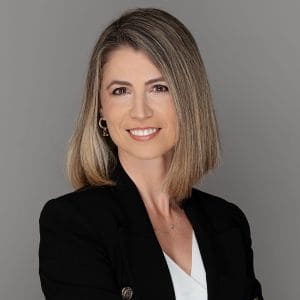
CJ Zarb, founder and Editor-in-Chief of The Pilates Journal, has a personal mission to elevate the Pilates industry and to educate and build a global community for all of the dedicated instructors and studio owners across all forms of the practice. She originally trained with the internationally recognised Polestar Pilates in Sydney. After years of practice, CJ’s enthusiasm for diverse methods sparked a mission to fill knowledge gaps in the Pilates world. The Pilates Journal, a leading voice of authority, unites top instructors and enthusiasts, showcasing all Pilates styles and methodologies. By providing comprehensive insights and a platform for all voices in the Pilates community, CJ empowers instructors and studio owners to excel and grow.
HIGHLIGHTS FROM THE SHOW
Clients Are Becoming More Educated
Consumers today have more options than ever. Many clients are trying multiple studios before deciding where they truly belong. As a result, clients are beginning to look beyond aesthetics and trends.
People are no longer just looking for a workout. They want:
- Personalized instruction
- A sense of community
- Better programming
- Teachers who truly understand movement
- An experience that feels supportive and intentional
Many boutique studios are now seeing clients leave large group reformer environments in search of something deeper. They’re realizing they don’t just want Pilates classes. They want guidance, connection, and care.
The Teacher Is Becoming the Product
One of the biggest conversations happening in the industry right now is the growing gap between being “certified” and being truly prepared to teach effectively.
More studios are noticing that many newer instructors are finishing training without enough confidence in programming, client management, or adapting sessions to individual needs. At the same time, teachers themselves are looking for more mentorship, more guidance, and more long-term support.
The industry is beginning to recognize that:
- Weekend certifications are not enough
- Mentorship matters
- Continuing education matters
- Career support matters
The teacher is becoming the product. Studios that invest in mentorship, career pathways, and education depth are likely to be the ones that last long-term.
Standing Out in a Saturated Market
For independent studio owners, the rise of large reformer franchises can feel intimidating. But smaller studios still hold one major advantage: connection.
Clients remember how a studio makes them feel.
The ability to notice when a client is having an off day, adjust programming, communicate personally, and create genuine relationships cannot be replicated through branding alone.
People want to feel seen. They want to feel supported. And increasingly, they are willing to stay loyal to studios that provide that experience consistently.
So Where Does Pilates Go From Here?
The future belongs to studios that are clear about:
- Who they serve
- What makes them different
- How they educate clients
- How they support teachers
- What kind of experience do they create
The reformer boom opened the door. Now the industry has an opportunity to deepen the experience.
Pilates is moving away from simply being a trend and becoming something people genuinely integrate into their long-term wellness lives. The studios that thrive next may not be the loudest. They’ll be the ones who build trust, consistency, education, and connection over time.
Full Live Show Transcript
Anastasiya Goers (00:29.218) Hi everyone, and welcome to Pilates Bridge Expert Series. Today I’m talking here with CJ Zarp, the chief editor of the Pilates Journal. And we’re gonna be talking about the trends that are happening in our Pilates industry. What they mean for you as a Pilates Studio owner and a Pilates teacher. Where do we go next, and how to really take those changes and really apply them to your business and your teaching and grow and help your clients really experience more Pilates. So CJ, to get us started, could you please tell us a little bit more about yourself, how you started with Pilates and where did you come up with the idea? Why did you decide to start the Pilates Journal?
CJ (01:17.536) Yeah, absolutely. It’s great to be here as well. So my journey started very early on. I was a dancer as a young kid and I was very fortunate to experience Pilates very early on. I was probably only 10 years old and got to experience Pilates for the first time as a regular thing in my dance schedule. And initially at that age, you you’re trying to understand movement in your body and all that sort of thing. So
It was very strange to me, but there was something that appealed to me about it. And as a dancer and going through my career, it was always at the backbone. And then of course, getting a bit older, I went and did a communications degree in journalism and then went into the corporate world and really found myself needing and missing that kind of movement that really meant so much to me. And I didn’t actually know why at the time.
It was many years later before I had children that I realized that I was missing this. I had this void, this sort of thing that corporate life wasn’t giving me. And I was going to a regular Pilates class and one of the teachers said to me, would you like to teach? And I remember laughing at the time thinking it was quite a funny concept. But over time I obviously toyed with the idea and then originally did my training with Polestar, Polestar Pilates. And absolutely loved it. Fell in love with the method again really understood it in a much deeper way and sort of my career sort of grew from there. I’ve been teaching now for over 10 years, obviously many others in the industry have been doing much more than myself. And I continue to learn from so many amazing people out there. But it really was an opportunity for me because I saw there was so many gaps in information that was out in the industry. I just felt like I’d done different trainings in different courses. I wanted to keep learning and growing.
I wanted to continue my education and I felt like there was this closed gap of not wanting to share information or you had to belong to certain groups. And I wanted to create a community where everybody felt that it was for them. It was inclusive. It was accessible. It was something that it doesn’t matter where your walk of life comes from or what style of Pilates you do, you have a place in this community. And you can also learn from others in the community. You can learn many different skills or even different ways of thinking that really help you grow as a teacher or a studio owner.
Anastasiya Goers (03:45.782) Yeah, no, it’s absolutely I grew with you completely about that creating the community where everybody can grow and feel welcome instead of having these divisions. That was something that really pulled me. That was I was really passionate about for a long time as well. And I’m really this is why I started what I’m doing just to really bring. I don’t know.
Anastasiya Goers (04:10.126) Wipe away all the boundaries between us so that we can just focus on Plotty. So really just build the bridges. yeah, and I think that I love the Plotty’s journal. I read it. I love the article sharing and I know this year in 2026 you had your first expo in the United States. Before that you had a couple in Australia and that’s like really exciting that now you’re in the US and you have another one coming up.
Anastasiya Goers (04:39.822) Just around the corner like we’re recording this in May and the next one is coming up in September, correct? Miami Yeah, it’s I think it’s really exciting to have an industry event coming in happening over here, but obviously, one thing that I want to talk to you about is that right now, Pilates is really on the rise. It seems like everybody’s doing Pilates, right? Every celebrity out there, somebody’s doing Pilates. Wherever you go, there’s everything. I was just in Miami actually the other day and it’s like you can’t walk a block without seeing a Pilates studio of one type or another. Yeah, or something that says Pilates at least. So that’s definitely, there’s a lot of awareness about Pilates It’s no longer one of those things that maybe five, 10 years ago, people was like, what is Pilates? Or I’ve never heard about it. Now people have heard about it. People know about it. How do you think it affects the industry?
CJ (05:45.674) Absolutely great question. So I think, you know, the industry’s at a crossroads. The reformer boom, as we like to call it, you know, has brought enormous visibility to Pilates, you know, and that’s a positive thing. We need to remember that because more people are experiencing it for the first time. You know, More people now understand Pilates as part of mainstream wellness. We’re not just a niche practice anymore, but the reformer boom, as we know, was never the full story. And the equipment alone, doesn’t build longevity. What matters is the experience, the education, and the outcomes around it. And I think what we’re going to start to see over the next few years is that differentiation set come through. As consumers and customers understand more about what Pilates is, they’re going to demand more from the studios that they attend. And I’ll talk a bit more about that shortly.
Anastasiya Goers (06:41.538) Yeah. And I think one of the big differences is really, as you mentioned, the experience of the teachers and their trainings. And this is one of the concerns that’s happening both for the studio owners that I talked to and the clients as well, the ones who are kind of savvy at this point, is that a lot of teachers, unfortunately, who are just interested in Pilates, they might be taking a weekend long certification just because it’s offered somewhere and think that they are certified Pilates instructor. And then when they come to an actual reputable, fully 600 hours type of studio, training studio, obviously they are not hired. And all of a sudden their weekend kind of training counts towards nothing and they have to get completely recertified. So there’s like this problem, the studio owners, they’re trying to find the teachers, the teachers don’t have the proper training.
Anastasiya Goers (07:41.358) And also the instructors or the teachers, they’ve completed the training, but they don’t realize that what they’ve completed is not really the full story, so they can’t find jobs.
CJ (07:51.714) To your point, this is something we’re gonna be actually unpacking as part of the Miami Expo. So one of the business panels we’re going to be running is called sort of the instructor gap or what we like to call the instructor crisis where what we’re seeing across the industry in many different conversations I’ve had with studio owners is there’s a growing gap between being qualified and being effective. And many instructors are finishing their teaching without the real confidence in programming or client management. Now, when I say that,
That’s for people that are doing potentially their matter reformer certifications, or maybe it’s a week weekend course, as you called it. And as a result, without that confidence, studios are feeling that, right? Especially at scale, it means, you know, these teachers are under pressure, they’re feeling under pressure to be able to perform in an environment where they’re just not up to speed and they might not potentially know it as well. And that’s something we need to be careful and nurture as well, that we’re not turning them away.
But giving them pathways to help them, to help them be better teachers. They only know what they know. I’ve had conversations with teachers where they’ve said to me, I’m fully comprehensively certified when in fact they’re only just mat and reformer. And again, they only know what they know. So I think as an industry, rather than saying to them, you’re not qualified, you’re not gonna meet the needs of my studio, we need to help those teachers understand why.
And that’s a whole industry conversation. And that’s why we want to bring it up in Miami. But also I think it means that we’ve got to shift the focus and realize how important these instructors are, you know, and the level of support they need. We’ve done some content recently through the Pilates journal where we talked about what education providers are seeing and what the needs are of instructors. And the biggest thing that came out was mentorship. People want more mentors. The days of mentorship have kind of fallen away in recent times and they haven’t been such a focus. You know, there’s been so much focus on the short course, getting started as a teacher, getting up to speed, teaching, you know, as many classes as can a week versus having an ongoing mentor to keep your career longevity in mind, where you’re headed, what your goals are. That is less offered at the moment or less of a priority set, but our community is telling us that people want it.
CJ (10:13.15) So just to give you an insight that no one else knows at the moment, we are actually going to open a mentorship directory where people can come and find mentors, where you can come and find those resources. Or if you’re a studio owner and you’re like, I don’t have time to help these people out. You can at least direct them to this sort of resource to help them find credible quality mentors. know, Anastasia, I think the thing is, you know, what we’re seeing is people need to be aware there’s a big shift happening what’s happening is the teacher now becomes the product. Are you thinking to yourself, what does that mean? It’s not the machine, it’s not the brand, the studios that invest in mentorship, career pathways for their teachers and education depth are gonna be the ones that last long term.
Just things to think about.
Anastasiya Goers (11:04.854) Yeah, no, no, that’s absolutely, yeah, that’s what separates somebody. Like the real plot is, guess I would say the real teaching that comes, that goes outside of just like your regular fitness class that you could take at a gym or someplace else. It’s not the same, the level, the depth of the education, of knowledge of the teachers and the connections that they built with the clients, whether it’s in their one-on-one training, especially in one-on-one training for sure, but even in classes providing that personalized care that, you know, yeah, that’s really what Plotty’s I feel is all about and that a lot of clients are craving that’s just outside of this whole social media and all reformer craze just because something’s showing up on social media. Obviously, we know that’s not going to last forever.
Anastasiya Goers (11:58.624) But for the clients, that part is gonna fall away, but the experience and what people actually feel in their bodies, that’s what’s gonna stay.
CJ (12:07.402) Yes. And to your point, you know, this is where we’re also seeing across the Pilates community that, you know, that the clients wants from a studio are also changing. You know, it’s evolving. You know, there are more educated, more demanding client. And what I mean by that is, you know, clients have so much choice now. You know, they have so much choice out there, maybe too much choice. Yeah. And because of that,
CJ (12:36.19) These clients are coming in with very high expectations from the studios they walk into. They want to have a strong community. They want an aesthetically pleasing studio. They want more personalized communications that they feel like you’re talking directly to them or helping them meet their goals. They do want better programming. Some of them have been to many different Pilates classes and it’s not quite enough for them. They’ve got to figure out where that next step in their journey is, and that could be your studio, but they need to find you. The fact they came into the industry, you know, tried Reforma Pilates for the first time or tried Mat Pilates for the first time is great because we’ve given them the confidence to like or feel like Pilates is for them. They enjoy something about the movement in their body. And then you’ve got the opportunity to educate them further. You’ve got the opportunity to keep them as a long-term client. We need studios to bring people in. We need studios to grow clients and I think the other thing too, is that, you know, wellness consumers also now expect more than just a workout. They’ve started to wake up to that. And that’s going to be sort of a superpower for Pilates and those studios who are doing it really well.
Anastasiya Goers (13:48.536) And I also wanted to kind of bring something over here as well to our conversations in terms of what the consumers are expecting. What I’m actually seeing with several of my clients, the studio clients that run studios that are mostly that personalized care is there at some point there was this divide or the fear that a lot of the reformer, larger group reformer studios are going to really outperform or take out all the business.
Anastasiya Goers (14:17.73) However, those smaller studios, what they’re seeing is that the clients, they’re trying those large performer classes, and this is just not something that resonates with them. They’re looking for that deeper knowledge, deeper connection, more personalized, and this is what’s actually bringing them to those smaller studios. And at that point, they’re a more educated and better client in a way because they already know what they don’t want, and they know what they want.
Anastasiya Goers (14:46.68) So they’ve kind of gone through that initial stage where maybe if they came to that small studio right away, maybe they wouldn’t have known the difference. At that point, they know. And I think that’s like the greatest knowledge that they can bring to the studio and then to stay a loyal client at that point.
CJ (15:01.482) Yeah, absolutely. And I think that’s the thing sometimes in the industry we kind of miss. kind of get so concerned about a type of experience that people having, whether it’s group reform or something else. Could be hip Pilates, could be all different types of Pilates. But again, if we bring people in, if they get to experience it and then they continue the journey with you and they continue well, that’s great for our whole industry, you and we’re going to elevate the entire industry over time. It will happen. It’s just going to take some time. You know, we’re in a very crowded market at the moment. You know, you’ve got to do different things to stand out. There’s more sophistication in what people expect. You’ve got to be more competitive, but you’ve got to do it in a way that makes sense for your brand, for your what you’re putting out there in the world as well. You know.
But, know, to that point, that’s another reason why. And again, not trying to bring it back to the expo, but it’s just relevant topics that we’re also going to be doing a panel about standing out in a saturated Pilates market. How do you do that? What does that look like? And really unpacking that from different points of view so that you can walk away and understand where your competitive edge is in your business or what you need to dial up or dial down. So it’s going to be a really interesting conversation.
Anastasiya Goers (16:16.652) Yeah, that’s I know this is something that’s like on everybody’s mind. Whoever is running a studio or planning to open a studio, there’s so many approaches to running a studio right now. And finding something that works for you is really important because that’s the only way if you’re trying to copy somebody else’s business model where it’s not resonating with your offering and the type of a client that you’re trying to reach, it will never be successful. I feel like to the greatest or satisfying, fulfilling at that point. So you want to find something that will resonate. And I think it’s a great topic, great panel to be part of.
CJ (16:52.5) Yeah, and you know, and I think, you know, today studios, you know, for a long time there, you could compete just as a Pilati studio and just be that one thing and do it really well. You know, in this market, you have to kind of think a little bit more laterally about what that looks like for you. You know, that doesn’t mean completely changing who you are and what you do. But, you know, it means thinking about other ways that you can engage your clients long term, you know, creating more community or opportunities, retention, thinking about your retention strategy. Like we talked about the quality of your instructors that you have in your studio, you your brand identity, what you stand for, all those things are ways you can kind of have a real stake in a difference in the market. These are only a couple of things that we’re going to talk about. But yes, it’s you have to think more broadly than just one thing, because there’s so many different things coming now and you need to have a strategy.
Anastasiya Goers (17:50.87) Yeah, I think something that I hear a lot from, especially the beginner studio owners, they said, well, when I asked them, who do you teach, what do you specialize in, other than just Pilates? And it’s like, well, I teach Pilates to everybody. Pilates is for everybody, which I agree with the statement that everybody can benefit from Pilates. And I would like your opinion about that.
Anastasiya Goers (18:17.238) I feel like as a studio right now where we are in the saturated market, you need to figure out who exactly you’re teaching the plot is to. So everybody might not be the right client for your studio. Even though plot is for everybody, everybody is not the right fit for you. What do you think about it?
CJ (18:36.962) It’s a really good point. The terminology or that phrase we use, Pilates is for everybody, is an important statement. And it does mean that it’s inclusive of everybody. And it should be. But yes, I do find in talking to so many studios across the globe, the ones that thrive, the ones that seem to do really well are ones who have identified their target market or their core offering.
They’re really clear about it. know, there’s an amazing studio in Melbourne that’s really about active aging and their demographic is that active aging audience. And it performs really well, just like, you know, we can go all the way to the other side of the country and say like, you know, reforming Pilates in New York City is targeting a totally different audience and really doing that super well. that young, vibrant, you know, somewhere between their thirties and forties. Maybe they’ve got kids, maybe they’ve got a lot going on, but they still like to look after themselves and find time for themselves if it’s just mental sanity, who knows? But you know, it’s carving out a piece of that audience that you can service really well. Maybe you have other things that pop in on certain days to support other audiences, know, beginner classes, whatever it might look like.
CJ (19:57.762) But even that is changing as well. I’m finding the definitions of classes and what they’re called is challenging because clients are trying to make sense of what your studio’s telling them because we’re changing the names of these classes. used to be beginner, intermediate, advanced. Now it’s like progressive, this, that, all these other terms. For a client, it’s really confusing. They’re trying to make sense of what the class is actually gonna give them. Clients don’t always know the difference and that’s where the risk sits, because they’re technically getting themselves into the wrong class sometimes, or they’re attending a class that’s just not right for them. And to that point, we’re actually doing a story that comes out tomorrow about, your clients in the right class level?
With so much studio hopping and self-selected class levels out there, it’s really challenging for people to know where they need to be. And in this fantastic article, we’re really breaking down the things that you can help teach a client so they learn where they are in their journey and what they need to learn and where they need to grow. So it’s just giving teachers the tools to understand where clients should sit in what classes. And hopefully that helps a lot of teachers out as well.
Anastasiya Goers (21:19.148) Yeah, that’s exciting. definitely going to link to that article under, like in our show notes over here so that everybody can read it as well. So what, like overall, do you think that this, the reform or boom that’s happening right now, do you think it’s helping industry or do you think it’s really diluting it and making the carbonate?
CJ (21:43.212) Great question. Yeah, look, I understand both sides of the argument because I think, you know, if you’ve been in the industry 30 years and you’re watching this, it can be heartbreaking to watch. I get it. You put so much effort, you’ve spent so many hours and time, you really care deeply, you write notes about, you know, where your clients at, where they’ve been, you know, their entire history. You know, I kind of look at those level of teachers as almost like a doctorate and Brent Anderson again wrote an article for us that’s coming out shortly really talking about the different levels of teachers and understanding that and what it gives you as you grow as a teacher, really a really good read. But to that point, those teachers have such a specific skill set. The reformer boom, what it’s done is open the doors more than anything else has implied is in a very long time.
We are more visible, we are more present, more people are showing up, more people are saying, I might be a runner, I’m a golfer, but I go to Pilates once or twice a week. So they’re adding Pilates as another modality in their weekly set of working out or whatever it might look like. And we want them to keep that longevity. We want them to understand that Pilates is all about longevity. So we want to keep those clients. It’s brought in a new funnel.
With that new funnel comes the opportunity to educate. And that’s what we all need to take an active role in educating our clients about understanding it more in their bodies. I think a lot of the time we see teachers leading the room, trying to tell people what to think all the time. And we need to give the clients a chance to work it out for themselves sometimes. Obviously some clients totally need guidance. There’s no question about it. But I think, yes, we need to look at the, I come at the reformer boom from a growth mindset.
I come at it from our, it has enabled more people to walk into your studio doors than ever before. But we need to now educate those clients on what, how it can serve them personally and make them stay with the method, hopefully for a very long time. That would be my goals.
Anastasiya Goers (23:49.272) So what do you think would be good ways of educating the clients? Just conversations, having one-on-one conversations with them?
CJ (23:56.69) Yeah great question. Look I think there it tends to depend on the studio right it’s easy for me to sit here and say you should spend you know time with each individual client breaking down giving them lots of information but as we well know when you’re running a studio it’s really hard to have the time to do all that sort of stuff so you can do that in different clever effective ways maybe that’s a check-in once every three or six months maybe that’s having certain team members that you trust who become mentors to the rest of your team, take that active role. Maybe it’s in the communications you put out to your clients, your emails, your social media, showing them your level of knowledge and depth gives them the chance to see you in a leadership position. So it elevates you. It makes them see you and go, they really understand a lot more that I can still learn from this teacher. I can still learn from this studio. So it’s just finding ways that also resonate with different clients. Some clients don’t look at social media.
Yeah, not interested. Some clients want that real interaction where you’ve given them something this week to focus on. You’ve got to find out what that nuance is with each and every client. And that’s a lot of time and effort. So I completely respect that. But yes, I think it’s that nuanced approach. But I feel like the teachers that we’re talking to here today are the teachers that have built those studios from the ground up and understand those clients deeply. And it’s just a matter of consistently showing up for them, no matter what’s happening in your business or in your home life.
Anastasiya Goers (25:25.686) Yeah. And what do you think? I know you mentioned a little bit about social media right now. And this is some of the comments that I hear a lot from the teachers as well, is the clients coming up and basically showing them some exercises on their social media and like, I want to do this and all that. So obviously there’s a lot of misinformation, a lot of misunderstanding. Again, a lot of awareness, but not necessarily the good kind all the time about what the clients actually see in there. What do you think is like the biggest thing that the clients misunderstand about Plottie’s because of social media?
CJ (26:10.57) It’s a huge question and it really depends on, know, what the content is as well, of course. but I suppose clients, you know, for clients, social media is like a faster news outlet. Yeah. It’s just constantly evolving, rotating, lots of information shared very quickly. we need to teach the clients to be discerning on what they’re looking at and help them spotting what’s good about content. What’s not great about content, you know?
CJ (26:40.736) So it’s educating your clients when they bring something in like that and they’re like, I want to do this. Well, maybe it’s a progressive goal. know, if that end goal is something super advanced, it might take them three to six months to get there. And they need to understand that there’s a process behind what’s happening or what you’re seeing there. In many ways, it’s no different to when you see a elite athlete post something on their socials and it looks effortless. It looks easy. Yeah. And people go, that’s phenomenal, they’re doing the same thing. There’s people in those sports who going, I’m going to go emulate that. We’re not unique, but I think sometimes we think we’re a bit unique. And so it’s just helping our clients understand whatever that goal is, how they get there, or maybe it’s not realistic. Maybe it’s just an athletic pose and just making it clear to them so they know the difference. They don’t know what they don’t know again. So people are going off what they see and the number of followers and trying to figure out if they need to be like that person or if they feel that they can relate to that person. And we just need to give them some guidance, I think.
Anastasiya Goers (27:48.59) That’s a great answer. Thank you, CJ. So I know we talked a little bit about the independent studio owners, the ones who might feel maybe intimidated slightly when the larger studios and franchises are coming right around the corner, coming up. What do you think is their strongest advantage? And we talked a little bit about it already, but…
Anastasiya Goers (28:14.806) If we could consolidate that into just one piece of advice for those individual studio owners, what’s their biggest advantage, strongest advantage?
CJ (28:23.658) Yeah, it’s a great question. I think the biggest advantage is the connections they can make with their community, you know, the value they can provide and really breaking that down for their clients. So they feel like they’re part of something they couldn’t have anywhere else. And what I mean by that is, know, you need to be really clear on who you’re serving, what experience you deliver and why your clients connect with you and then honing down on that connection piece. What makes you really special to this community? What do you do that no one else does? Maybe it’s your constant touch points, checking in with them. Maybe it’s little love notes that you send them every few months. Who knows? But it’s finding ways to understand your client at a depth that no one else does.
You know, understanding, you know, when you work in studios for a very long time, you know, those clients that walk in and you just take one look at them and you go, something’s not right today. They’re off. I’ve got to help them more deeply. Maybe today is not a day to push. Today is a day to support. Understanding the nuances, really paying attention to those things. And that’s just going to make those clients stick to you for longer. You know, I think also
You know, these smaller studios, you have so much power in a smaller studio, boutique studios, smaller studios. You know, people are going to those bigger studios, but they don’t always want that experience. They like when the teacher comes up and pays attention and changes their form or helps them more deeply. They feel seen. They feel that you genuinely care.
And those things are priceless, which makes you again, stand out from others in the market. And it really comes down to, you know, the education of your team, that your team follows the same suit as you. You know, there’s consistency from the top. All those sorts of things help that no matter the type of experience they have in your environment, it’s always consistently the same.
Anastasiya Goers (30:33.899) Yeah, that’s great. I think something that you pointed out, and that’s not just for the studios, but I think it speaks a lot to our industry as well, is something that the clients are looking for is the connection. And I think that’s the same thing that a lot of teachers and professionals are looking is the same connection. In our world where we have all the ways to stay connected with the people, it seems like this is one thing that a lot of people are
Anastasiya Goers (31:00.79) missing so much that genuine one-on-one, no technology connection where somebody actually knows you for who you are and understands you personally and somebody that you can relate to on some deeper level.
CJ (31:16.63) Yeah, and you know, even in the younger generations, we’re seeing that, know, the Gen Z’s, they’re really wanting that the research is showing that people are really wanting to understand more, they don’t just want to come into a class and walk out. So there’s an opportunity, there’s an opportunity there to educate that, that end user or that end client.
Anastasiya Goers (31:37.282) Yeah, awesome. Something that you mentioned, and we’re coming up to the end of our podcast here, and something that you mentioned at the beginning, so that the industry right now is at the crossroads. So where do you think, what are the crossroads, and where do we go from here, in your opinion?
CJ (31:57.064) Yeah, it’s a huge question and I think it’s an evolution as in, you know, can’t be sold here and now today. But I think, you know, as a result of the crossroads and by the crossroads, I mean a point where we’re seeing, you know, a lot, a lot of different things happening. We’re seeing different teaching standards, different training pathways, different interpretations of Pilates. You’ve got to be able to have a very clear set of ways of doing, ways of explaining who you are and what you’re offering out in those communities. And then it’s really about giving people information that shows how you’re different to your competitors around you. Really what’s separating you.
And I think also you need to think about, this is sort of going slightly off topic, but you also need to think about, you know, the other different trends that are showing up in the market in the moment and whether you adapt them or you don’t. And it’s absolutely fine to not adapt these things, but you need to be aware. You need to be aware what you’re competing against so that you can make informed decisions about where you’re to lean in or not. You know, there’s a lot of conversation around in the broader wellness industry around results-driven programming or strength training, right? This is such a big thing that’s coming out at the moment. All pieces around recovery and longevity. Are you going to have a recovery space within your space now in the future, long-term or not? You know, these are other ways that you can increase the value of your membership. You know, you could increase the costs of a membership with you if you have those services. The other thing to think about is
You know, the role of an instructor is expanding. They don’t just come in and teach class. They do a lot more things than that these days. They have to cover a lot more client needs. So how you’re supporting that so your studio grows and thrives. Or maybe you have to think about the digital environment. You know, creating a studio that’s a hybrid studio that offers things in the down times or gives your community more opportunities to check in via workshops or
CJ (34:13.75) Community run club, I don’t know, I’m making it up. These are the things we’re seeing out there in the community. And I know for some people that’ll be an eye roll, for some it’s like, no, that’s what my community wants. So it’s finding those things that make you differentiate, stand out. So in the crossroads and all the noise around you, people are going, yeah, but that’s what I need to belong to.
Anastasiya Goers (34:35.948) Yeah, definitely that. Your specialty really like something that you’re known for, something that you really bring to your clients. And I think like the education is probably also a big part of that, just being educated. And like you mentioned, mentored as well, growing as a teacher, having your team grow as teachers, growing yourself as a studio owner or a teacher. I think that’s super important just to kind of really keep not become stagnant in this world.
CJ (35:08.866) And it’s easy to not find time for it because we can’t live such busy lives. Like I get it, I get that you’re trying to juggle and if you’re a studio owner, you’re juggling so many things. So when someone says, do more education, do more things, maybe it’s not the doing more, but it’s doing things better. Maybe it’s…
CJ (35:29.314) Even time for self-reflection. know some people that came to our expo in LA said, you know, even just stepping away for the two days and being in the environment out of their studio made them think differently. They saw different things that’s happening in the industry that just reminded them that, oh, that’s not the direction I want to go. This is the direction I want to go. Or I need to pay more attention to this because this is going to come and impact my studio soon. So am I ready for it?
And when you step out of your environment and you’ve got two days to be at the expo, you can hear all those different ideas and it gives you the chance to then take that back into your studio.
Anastasiya Goers (36:07.24) And what would you say, since you mentioned the expo, I want to touch base a little bit, what do you think is the biggest outcome or the takeaway that people coming to the expo are bringing home with them?
CJ (36:24.438) Yeah, great question. I mean, obviously everyone has different needs and they pick different sessions and they do their own tracks. But what I would say is the conversations we’re having are about shaping the future of the industry. If you’re in the room, you’re influencing the direction the industry goes. So it’s important to have all those different voices in the room, in those business panels, having connection conversations across the entire weekend, because we build an industry together.
CJ (36:52.854) And that’s by having everybody in the room together. And you can learn so much about your business, what’s coming across the entire industry so you can map and plan and not be left behind. Or you can go and learn from fabulous teachers like Tracy Mallett, Maria Leone, Andrea Spear and many others who are yet to be announced. Who will just elevate your level of thinking.
You know, sometimes you just need that spark from somebody that just reminds you why you’re doing what you’re doing or takes you to another level. And that’s what this weekend provides. Of course, networking as well. People you haven’t seen in a long time. had so many people in LA say, I haven’t seen this person for so long. Those connections. I think sometimes we don’t realise how important in-person events are until you actually get there. So I think that’s something to be aware of as well.
Anastasiya Goers (37:45.898) Awesome. And where can people find out about the next thing, especially if they’re watching this after the Miami event has passed, where can we find all the upcoming events and register? And we’re talking only about the US one right now, but you also have the events in Australia planned. if anybody is listening to us who is not in the US or someplace else, can you let us know where we can find all the details?
CJ (38:13.674) Yeah, of course. So there’s a couple of different places you can subscribe to the Pilates Journal for free and that will give you expo updates. So that’s just at pilatesjournal.com. So that’s the simplest way to stay up to date with the latest information in the market, industry resource trends, what’s coming next and also the expo. But of course, we also have the pilatesjournal.com which has all the different expo information, no matter your city.
As Anastasia said, we’ve got September in Miami, LA will be in January, 2027. And then we’ll be back in February in Sydney as well. So it’s an exciting rollout, that’s for sure. Yeah, absolutely. And that means we get to share more of what we’re doing with our entire community. And that’s really important because we want to create a safe space for everyone.
Anastasiya Goers (38:55.424) Yeah, can go right back to back. You can just keep hopping from one to the next.
Anastasiya Goers (39:11.454) Awesome. Well, thank you so much, CJ, for sharing all of your insights, talking about the industry trends. And again, for organizing the expo, especially, leading the Pilates Journal and organizing the expo and letting the entire community connect, creating this welcoming space where anyone can come and anyone can learn and anyone can share their passion and love for Pilates. Thank you so much.
CJ (39:38.954) Yeah, no worries. It was a pleasure.