
Artificial intelligence is reshaping the Pilates industry.
AI can help busy Pilates professionals save time by streamlining business operations and generating content.
Newsletters, emails, social media posts, website copy – even workshops and educational materials – can now be created within seconds.
There is no doubt that AI is reducing workload and relieving the panic of staring at a blank page.
But as we rely more on the use of AI, an important question emerges:
If everyone has access to the same tools and draws from the same pool of information, what makes one Pilates teacher or one Pilates studio stand out from the next?
The answer isn’t better prompts. The answer is you.
Your voice matters now more than ever.
In a world where anyone can produce polished content, your personality, your teaching style, and your perspective become increasingly more valuable.
AI has many benefits. It can boost productivity, automate repetitive tasks, outline ideas, and help catch grammatical mistakes and awkward phrasing.
What it can’t do is reproduce your experience. It can’t be human.
Your experience, no matter how vast or limited, is uniquely yours. It shapes who you are, how you teach, and how you communicate and connect with others.
Most clients are choosing more than just a service; they are choosing a person they trust. They are choosing your observations, your sense of humor, your expertise, and your authenticity.
They may come to you because you offer Pilates, but they stay because they connect with you.
Your voice matters because it genuinely reflects who you are.
When I refer to your voice, I am not talking about the sound of your voice. I’m talking about your voice on the page—the version of you people encounter when they read your website, newsletter, social media posts, or educational materials.
If your AI-generated content sounds overly polished, corporate, or hyper-professional, but in person, you are warm, approachable, and conversational, people may experience a disconnect.
The goal is not perfection.
The goal is for your content to feel like a genuine extension of you, the person your clients meet in the studio.
Authenticity Matters More Than Perfection
One of the main reasons people rely on AI to generate content is that they believe they are not good enough writers. They don’t trust their ability to write polished content.
As a professional writer, I would never say polished content doesn’t matter. But I would say it isn’t as important as genuine, authentic writing.
When you write in your authentic voice, when you clearly represent who you are and what you offer, perfect or not, you give potential clients an idea of what it would be like to work with you.
Authenticity does not mean being careless or unprofessional. It means allowing your real voice to take center stage. It means trusting that you can tell your story and share your expertise better than AI can.
Clients are not looking for flawless copy. They are looking for signs of the person behind the words.
As humans, we are imperfect. Ironically, it’s that imperfection that will help us stand out in a world of generic, common, and, quite frankly, boring content.
Because when every studio, every Reformer class description, and every cue begins to sound the same, the content that stands out is the content that sounds unmistakably human.
The Hidden Cost of Relying Too Heavily on AI
Though it’s true that too much AI-generated copy can flatten individuality, there is a more significant hidden cost: The loss of thinking.
Writing is not simply a way to communicate ideas; it is one of the best ways to develop them.
The act of writing forces us to reflect on our experiences, define our ideas, and articulate what we truly believe. It challenges us to ask questions and identify gaps in our understanding. In every way, writing is a part of learning.
When we allow AI to do the heavy lifting, we may save time, but we also rob ourselves of the opportunity to sit with our thoughts and form our own opinions.
The strongest teachers are not necessarily the ones who have been teaching the longest. They are the teachers who have spent time thinking deeply about what they teach and why they teach it.
In the end, thinking is one of the most valuable skills a teacher can develop. AI can support that process, but it should never replace it.
Using AI Without Losing Yourself
If clients are longing for a transparent, genuine, human view of who you are, does that mean you should never use AI? No.
AI is a tool, and as with any tool, it has its usage.
AI is particularly useful for behind-the-scenes processes such as organizing notes, turning thoughts into an outline, suggesting blog topics, or repurposing original content into a social media post. It can provide feedback too. When prompted correctly, AI can tell you if the intent of your content is clear or if you need to restructure it.
Used in this way, AI supports the writing process without replacing the writer. Because the ideas originate with you, your content remains a genuine reflection of who you are and what you believe.
The key is that you create content using your own background, stories, expertise, and judgment. AI is only there to help fine-tune it.
A simple guideline is this: If AI is doing all the thinking, it is probably doing too much.
Trust Your Voice
With so much AI-generated content filling every space, it can be tempting to believe that a system designed to mimic human intelligence—reasoning, learning, decision-making – can say it better than you.
Don’t believe it.
AI hasn’t taught the students you’ve taught, or observed the bodies you’ve observed, nor has it accumulated your specific combination of successes, failures, insights, and experiences. All of those details shape not only who you are, but how you communicate.
Your clients are not looking for perfect grammar. They are looking for signs of a real person – someone they can trust and relate to.
So, I remind you to trust in the very thing that makes you unique, interesting, and valuable: your voice.
Because in the end, your clients don’t want to hear from AI.
They want to hear from you.
About the Author

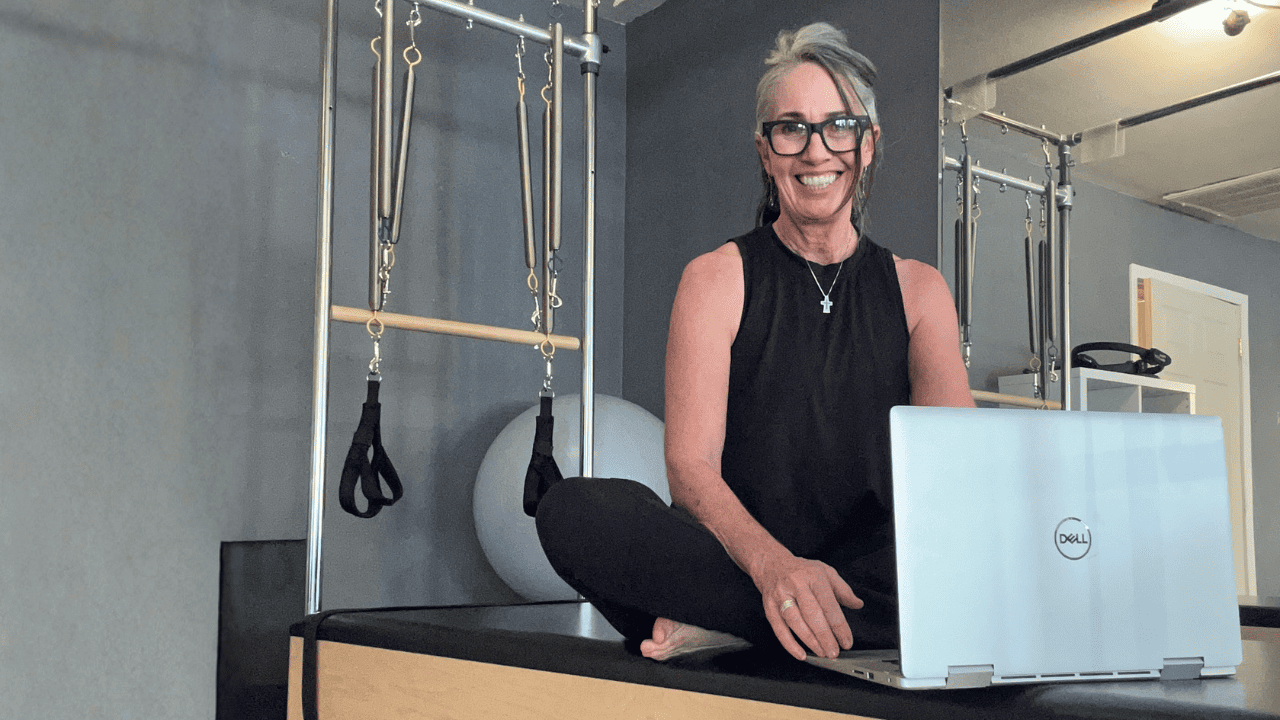
Patti Jo Amerein is a writer, editor, and BASI-certified Pilates teacher with more than 20 years of experience in Pilates education. She has served as a Master Teacher and evaluator for an international teacher-training organization, helping to develop educational standards and assess certification candidates worldwide. Today, she specializes in creating and refining educational content for Pilates teachers and teacher-training programs, combining her expertise in movement, teaching, and communication to make complex concepts clear, practical, and accessible.
Connect with her on LinkedIn