
Pilates has changed dramatically over the past few decades. The Reformer is more visible than ever, new class formats continue to emerge, and social media has introduced increasingly creative interpretations of the work.
But as the industry evolves, an important question remains:
How do we keep innovating without losing what makes Pilates work in the first place?
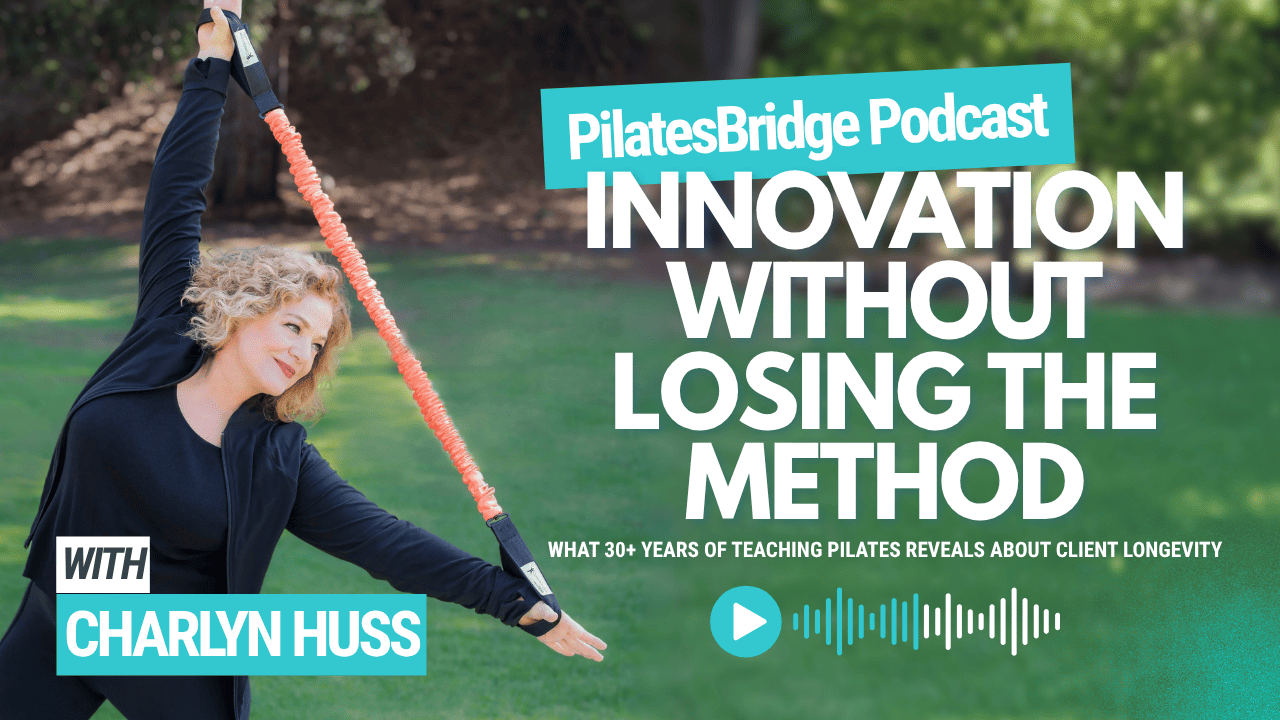
In a recent PilatesBridge Show, I spoke with Charlyn Huss, a Pilates teacher with more than 30 years of experience and co-inventor of the Core Spring apparatus. We talked about how teaching evolves with experience, why clients stay for decades, and how curiosity can help Pilates professionals build lasting careers.
🎙 Guest Educator: Charlyn Huss, MA, NCPT, is a Nationally Certified Pilates Teacher with over 30 years of experience, high-performance coach, and co-inventor of the patented CoreSpring® Apparatus. As creator of the CoreSpring® Method, she combines Pilates principles with thoughtful innovation to help people move with greater confidence, ease, and resilience.
Resources mentioned:
- Exclusive PilatesBridge Listener Offer from CoreSpring®
PilatesBridge listeners can receive a complimentary 25-minute Personal CoreSpring® Assessment & Introductory Session with Charlyn Huss with the purchase of a CoreSpring® Kit.
Use code PILATESBRIDGE. Offer expires September 30, 2026.
https://www.corespring.com/pilatesbridge
Meet Charlyn Huss
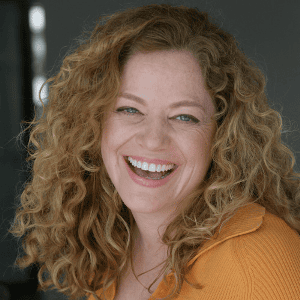
Charlyn Huss, MA, NCPT, is a Nationally Certified Pilates Teacher with more than 30 years of teaching experience, high-performance coach, and co-inventor of the patented CoreSpring® Apparatus. As creator of the CoreSpring® Method, she has spent three decades exploring how movement, language, and intelligent spring resistance can help people move with greater ease, confidence, and resilience. Charlyn is passionate about honoring Joseph Pilates’ principles while encouraging teachers to ask better questions, embrace thoughtful innovation, and empower clients to become confident, independent movers. She teaches internationally and is the founder of CoreSpring LLC, where she develops educational programs, teacher trainings, and movement experiences designed to help people truly Spring to Life.
Connect with Charlyn:
Instagram: @thecorespring
Facebook: @CoreSpring
HIGHLIGHTS FROM THE SHOW
Teaching Beyond the Rules
Early in a Pilates teacher’s career, rules are useful. They give us something to hold onto while we’re learning the exercises, sequences, springs, breathing patterns, and seemingly endless list of cues.
But there comes a point when knowing the rules is no longer the hardest part. The harder part is knowing when to stop relying on them so heavily that they prevent us from seeing the person in front of us.
For Charlyn, one of those lessons came through a longtime client she had been teaching for about five years. Despite all that time together, the client continued to struggle with the breathing pattern Charlyn was asking her to follow. Eventually, she said, “I don’t think I’m ever going to get this right.”
That comment changed the direction of the work.
Instead of continuing to correct the breathing, Charlyn began paying closer attention to what the client was already doing. How was she naturally breathing? How was her body responding? What could they learn from that instead of treating it as something that needed to be fixed?
It became less about searching for mistakes and more about helping the client understand herself.
The goal shifted from self-surveillance to self-awareness.
That distinction matters. Pilates should help clients become more connected to their bodies, not more preoccupied with whether they are doing everything “right.”
Cueing Is Not Teaching
That experience contributed to another important realization:
Cueing is not teaching.
We need cues. We need instruction. We need to know how to clearly communicate an exercise. But knowing what to say and when to say it is only one part of being a teacher.
Once you know the exercises, the real work begins.
Teaching means figuring out how the individual in front of you can feel, understand, and execute movement in a way that makes sense for their body. It requires observation, conversation, and a willingness to change direction based on what is happening in the room that day.
One of the questions Charlyn regularly asks her clients is, “What’s going on with your body today?”
It is a small shift from the usual “How are you?” but it immediately asks the client to pay attention. Maybe their hip feels different. Maybe they slept poorly. Maybe something that felt difficult last week feels surprisingly easy today.
The session becomes a conversation rather than a workout that was decided before the client walked through the door.
Give Clients a Way to See Their Progress
There is no shortage of creativity in Pilates right now. Teachers have more inspiration, variations, props, and programming ideas available to them than ever before.
But there is also value in repetition.
If every session is entirely different, clients may have a harder time recognizing just how much they have changed. Familiar exercises give them a point of reference.
The Hundred is a perfect example.
At first, a client may struggle with neck tension, breathing, or simply holding the position. A few months later, they return to the same exercise and suddenly something feels different. They are stronger. They can organize their body more easily. They understand what they are doing.
The exercise stays the same. The client changes.
I’ve seen this myself with a client who initially dreaded the Hundred because it aggravated her neck. For a while, it was the exercise she wished we could simply skip.
Several months later, she could do it without pain.
Eventually, the Hundred became something completely different for her. Instead of being the exercise that showed her what she couldn’t do, it became one of the ways she could see where she was in her practice.
That kind of progress can easily get lost if we are always rushing toward the next new thing.
Clients don’t necessarily need a brand-new experience every session. Sometimes the most powerful moment is realizing that something they once struggled with has quietly become possible.
Innovation Doesn’t Mean Leaving the Method Behind
With so many creative Pilates variations appearing today, it can be tempting to frame innovation and tradition as opposites.
Charlyn doesn’t see them that way.
Joseph Pilates was an innovator himself.
Innovation does not have to mean completely reinventing an exercise or moving so far away from the method that the original intention disappears.
Sometimes it is much simpler.
It might mean placing a block where a client needs more support. It could mean using a towel to help someone understand an action or modifying an exercise so a beginner can access the experience more successfully.
The important question is why.
Why are you changing the exercise? What are you trying to help the client feel? What principle are you trying to preserve?
Throughout her career, Charlyn has taken Pilates principles into different environments, including water-based movement, ballet, and yoga. The format could change, but the principles behind the movement continued to guide the work.
Innovation works best when you understand the foundation you’re innovating from.
Without that foundation, creativity can easily become novelty. With it, adaptation becomes another way to make the method more useful to the person in front of you.
Why Clients Keep Coming Back
Some of Charlyn’s clients have been working with her for more than 20 years.
That kind of longevity is not built by constantly inventing new workouts.
It comes from continuing to pay attention.
Every session gives a teacher another opportunity to observe, listen, personalize, and learn something new about the person they are working with. Over time, that relationship becomes incredibly valuable.
You are no longer simply the person guiding them through exercises. You know their history. You know what has changed. You understand how their body tends to respond, and you can help them navigate the changes that inevitably happen over years and decades.
Interestingly, Charlyn does not try to protect those relationships by keeping clients away from other teachers.
She encourages them to take other classes. She tells them to explore Pilates when they travel. And when they return, she invites them to bring back questions about what they experienced.
There is a confidence in that approach that I think is worth paying attention to.
Instead of trying to keep clients from leaving, give them a reason to return.
The reason is not that you are the only teacher they can work with. It is the depth of the relationship and the value you continue to bring to their practice.
Better Questions Lead to Better Innovation
Curiosity has also shaped Charlyn’s work outside the teaching studio.
It played an important role in the creation of the Core Spring apparatus.
One of her students, Joel, noticed something most of us might never stop to question. Pilates apparatus uses springs. Mat work often relies on resistance bands.
So he asked:
“Why can’t I get my own spring?”
Charlyn did not have an immediate answer.
Instead, they started experimenting.
Joel brought in an early concept, and Charlyn began applying what she already knew from decades of working with Pilates apparatus, springs, and props. That back-and-forth eventually developed into the Core Spring apparatus and the Core Spring Method.
What I like about this story is that it did not begin with a big declaration that they were going to invent something.
It began with a question.
“Why do we do it this way?”
“Could it be done differently?”
“What would happen if we tried?”
That is often where useful innovation starts – not with the pressure to create something new, but with enough curiosity to examine something we have stopped questioning.
Build a Career Around Curiosity
After more than three decades of teaching, Charlyn still sees her clients as part of her education.
Their questions, limitations, breakthroughs, and frustrations have all influenced how she teaches. They have helped her rethink familiar ideas, experiment with new approaches, and continue developing as a teacher long after the initial certification was complete.
There is an important lesson in that for Pilates professionals, especially at a time when there is so much pressure to keep up with what is new.
Longevity does not require constantly reinventing Pilates.
It requires knowing the method well enough to recognize what matters, while staying curious enough to notice when the person in front of you needs something different.
Know the method. Pay attention to the person in front of you. Help them recognize their transformation.
When those pieces stay at the center of the work, innovation does not pull Pilates away from its roots.
It becomes one of the ways we keep the method relevant, useful, and alive.
Full Live Show Transcript
Anastasiya Goers (00:02.153)
Welcome everyone to the Pilates Bridge Live Show. Today I’m talking with Charlyn Huss, a Pilates teacher with more than 30 years of teaching experience and co-creator or co-inventor of the Core Spring apparatus. And today we’re going to be talking specifically about how to keep how to keep evolving as a Pilates teacher without losing the principles that make the method work. We will also discuss what keeps Pilates clients coming back.
For over twenty years, right, Charlyn? And also how curiosity, trust and better questions can help teachers build a Pilates career that really lasts. So Charlyn, before we get started with our questions and our interview here, I would like you to introdu introduce yourself. Tell us a little bit about your Pilates experience. I mean, you had over what twenty, thirty years of experience teaching Pilates. How did you get into Pilates and where you are now?
Charlyn Huss (01:01.336)
Well, truth be told, my first Pilates experience was in 1988. So I became I became a fan. I found a book in Shakespeare and Company in Paris, France, called Return to Life by Mr. Pilates. And I was a curator of exercises because I had pain in my back as a child.
That actually wasn’t diagnosed as scoliosis until my 20s. So I think it became scoliosis. And that became sort of central as I became a curator of exercises and eventually started teaching exercise. It became central to the way I approach the body, teaching things that are called permanent. When they told me I had scoliosis, I they said it was permanent and it was going to get worse. And I said, which is it?
Which is it? So having discovered early on in my life that I could feel better with exercise, I became a curator and that’s how I found this book. I had a I have a have a pretty extensive collection of exercise books, calisthetics. I love stuff from like the 60s, the 40s, the 50s. I used to collect these little Dell books that were at the supermarket. They cost 99 cents. I spent my allowance buying, which I which I now know are yoga and Pilates exercises pretty much.
Big fan of Jack O’Lane, you know. So I was, I loved movement. I was kind of a gymnast trapped in a in a body that didn’t work, in a spine that just was always in pain. So that’s kind of my story. I I didn’t start working with the teacher until I came back to the States later in the 90s, but early 90s. But I I started doing his exercises and it started to emerge.
As something that I kind of went to. And that I started to understand what a method is. I wasn’t just doing disparate exercises. When I read his book, I realized that there was a methodology to it that the other books didn’t have the same commitment that he had to an overall lifestyle, to how to take care of your skin, how to eat, how to interact with telephones and cars. You know, he really saw the human body in its full experience.
Charlyn Huss (03:25.793)
I was training as a classical actor, and I taught movement for actors, and I did Pilates exercises as part of a different, different array of things that I did for vocal resonance and posture, which is extremely important for an actor. You can’t play certain roles if you are slouching, let’s face it. So posture became a aesthetic goal.
Charlyn Huss (03:55.362)
That turned out to be a health marker. And that was another thing that informed the way I started to look at people and help them work with posture and think of it more as a way of being healthier as opposed to a way of being more beautiful. Although it’s both. So that’s sort of my story. I could how I became a studio owner and a Pilates teacher is kind of we’ll we’ll get to it in some of the questions, I think.
Anastasiya Goers (04:20.9)
All right. So with everything obviously you’ve been around Pilates, you’ve been teaching Pilates, you’ve been practicing Pilates for many decades, like several decades now. So what do you think changed the most in the way that you understand Pilates and what in your opinion stayed the same?
Charlyn Huss (04:40.329)
I think what changed for me through teaching, and I think that when you train to be a Pilates teacher, it’s so overwhelming, especially when you’re doing comprehensive training. There’s so many apparatus, there’s some sequencing to remember. There’s you’re doing geometry all day, you’re angling the springs so that the joints don’t have torsion, you’re looking at you know clients’ form, are they in pain? But the thing that changed for me, and I do remember the moment, the pivot.
When I had been teaching for several years, and I, well, actually, probably almost a decade at that point, more than a decade, teaching matte Pilates, but teaching comprehensive equipment. I had been teaching for quite a while, and I had a client for five years who came twice a week in a duo, who was an athletic, beautiful woman. I mean, she had been a competitive swimmer, and she could never get the breathing right. I would say inhale, she’d be exhaling.
I would say exhale, she’d be holding her breath. And after five years of, and this she was not the only one. She was not the only client who complained or self-deprecated about this phenomenon. And she looked at me one day because I and I tried to have some good humor about it and just you’ll get it. And then I thought to myself, she’s been here years. And this particular day, she looked at me when she left the session and she said, I don’t think I’m ever going to get this right.
And I thought, what am I teaching? Why is it important that I say inhale here and exhale there? What hill am I going to die on with the breathing? She’s doing amazing work. She’s used to holding her breath as a swimmer. I want to work with what she, I want to actually see what she’s doing. Because I’m only seeing what she’s not doing. And that was sort of.
Charlyn Huss (06:39.681)
What revealed what was revealed to me with the breathing insight was that I was teaching things a certain way and I was correcting and correcting and correcting and correcting movement, breathing, correcting, correcting. Do this, do that. Don’t do this, don’t do that. And that breathing insight, I just stopped. And I just started to look at how people were breathing. Were they inhaling on the out? Were they exhaling on the out? Or the what were they doing with their body and their breath that I could actually d jump into and work with. And then cue.
Charlyn Huss (07:16.503)
So I think being committed to the book that I learned from that said, inhale here, exhale there, inhale there, exhale there, I went back to return to life as well. And I looked at some of those exercises. And if you’re looking at an exercise like single-leg stretch, we call it, there are two breath cues in the entire thing. He says, inhale slowly, and then you’re doing all these things, and then he says, exhale slowly, and you’re doing all these things. So I started to realize that the breathing, it’s very difficult to teach breathing because people are already breathing.
And it changed the way I looked at teaching completely over the next decades, really. It became a pivotal moment for me. So I guess that changed and it
But it didn’t take me away from the method at all. I didn’t say, this method’s wrong. I’m gonna throw away this book and forget these people. No, I it it forced me to dive deeper into what the method was actually trying to teach. And what was I there to do? What was I trying to help the client client create? What could I provide to them besides the word. I wanted to provide self-awareness. I didn’t want to provide surveillance, self-surveillance.
Anastasiya Goers (08:48.104)
Yeah, it’s it’s a good way to think about it. like the differentiator b between the surveillance and self awareness. I think that it’s easy as a teacher to get caught up in that because you want to give certain cues. It it makes teaching in a way easier, especially for newer teachers, because if you can follow the rules, it’s easier to teach. You don’t have to really step outside of those boundaries, but then really looking at the body in front of you, looking at how they move and what their patterns are and trying to work with that that takes that teaching to a like very different, like a completely new level.
Anastasiya Goers (09:30.793)
So how like right now if we’re talking about breathing, so if you’re working with a new client, would you even cube breathing at all or just kind of let them flow with whatever they
Charlyn Huss (09:40.748)
Yeah. I didn’t abandon now, I didn’t abandon cueing breathing. I want to be clear. I actually start with breathing. I usually start with new clients, a brand new client coming in. Now, this has changed over the years because it used to be people would come in and it was the first time they’d ever done Pilates before. But that’s definitely changed. I mean, I have people coming in who’ve been doing Pilates for a decade. They’ve worked with multiple teachers. And so, but I still have them.
Sit, we talk. I have my you know phone or my tablet or my clipboard and I just ask some questions that are outside of the re release form. I get clarification on the release form about injuries, surgeries, goals, and I have them do Pilates from the chair. I basically cue them for I show them the kind of breathing and I say, you know, forgive me if you’ve heard this before, but this is important to what we’re teaching here, which is we’re teaching back breathing.
We’re not teaching upward breathing. We’re teaching backward breathing, where you breathe in over, and it’s something you can even do when you’re congested. I’ve tested it and it works. You can breathe past congested sinuses. That the yogis do this all the time. It’s part of ujjay breathing, and I believe it’s part of what created the hundred breathing, for example, with Joe.
Is this percussive breathing that’s done through the nose, but it’s past. So we’re breathing back and into the back. So I talk about that with them. Most of the time, people have never heard that when I say that. And so I have them put their hands on their ribs and they can feel the ribs expand. I have them pull up and in and I say, okay, now you’re doing Pilates. And we haven’t even left the chair. So it’s bringing them into the experience of how Pilates really translates into.
Body awareness, control, breathing, core connection, things that we’re not accustomed to controlling. Because as we’re younger, we don’t really have to. We can get away with a lot. Because our core is naturally firing. Ideally, mine wasn’t. And I think that’s what made me have to focus on this earlier. But I think that then I start to, I actually get people on the reformer first.
Charlyn Huss (11:59.5)
I don’t I don’t train them on the mat to begin with, especially if they already have experience. But even if they don’t, people are coming to me and paying good money because they want to get on that thing. They want to get on that reformer. You know, it’s so popular. They have no idea what’s about. Maybe they’ve been doing personal training. Maybe they’ve been on the reformer. And I am I’m just gonna give them my experience of the reformer, which is it is one of the best assessment tools in any industry if you wanna know what’s going on with someone’s body.
And they start to move on that platform. They can close their eyes. There’s no danger of falling. I can see how they’re breathing. I can start, they’re saying, Well, when am I supposed to breathe? My teacher told me I’m supposed to do this or that. And I had a client many years ago come in and her husband had dragged her in. She was a runner. And in her 70s, maybe late 60s at the time. she’s been my client for about 15 years. She got on, she did 10, and I was watching, and she stopped and I said,
Why’d you stop? She goes, Well, I did 10. I said, Yeah you haven’t even gotten there yet. She goes, gotten where? I said, Where I can see how you’re moving. I said, You’re using your knees, you’re snapping out, you’re pushing against the spring. Let’s talk about the movement that’s happening throughout your body while you’re interacting with these springs. She was no stranger to Pilates, but I just gave her an experience of.
Charlyn Huss (13:21.377)
I want to see how you breathe. I want to see how you move. You said your knees bother you on your intake form. I’m certainly not going to let you use your knees to push out on this heavy spring. Let’s press out. Let’s engage the core. Let’s engage the glutes and the hamstrings in a lengthening. And let’s start to really use these springs to their maximum capacity. Otherwise, you can just go do bench presses or leg presses at the gym. I don’t need to be there for that. And she never did it again. She’s just was like, whoa.
Anastasiya Goers (13:51.005)
Yeah, I think that’s something that I think like a lot of clients can miss at the beginning if they’re really not working with a good teacher who’s not guiding them actually through the experience of Pilates, as opposed to guiding them through a series of movements. just kind of like that awareness of their body, of their body mechanics, of how everything works together. And that’s exactly what I think sets pilot is apart from a lot of other modalities, forms of fitness, and that what attracts a lot of people to it. So it is, it is. There’s nothing like it. And interesting on a different like I was talking, I forgot who I was talking, either one of the teachers or one of their yeah, I think somebody I interviewed on the podcast, I can’t remember who it was, and we’re talking, it’s like
Charlyn Huss (14:26.645)
It is it is completely different.
Anastasiya Goers (14:46.936)
You can’t be doing Pilates without ever stepping into the Pilates studio. if you know how to work your body, like between the breathing and the awareness and everything connected together, you can be doing it anywhere if you know what you’re doing. so just like that studio experience is just like one small portion of what the Pilates journey, the Pilates practice is all about. It’s not just like that one or two hours a week that kind of really transcends your entire lifestyle.
Charlyn Huss (15:19.309)
Yeah, I think that’s what got me about Joe in my very first experience reading him, his book and how he talked about using a telephone. And the computers were just coming into, you know, to view at that point. And I was like, I wonder what he think of the computer. Well, now, of course, it’s it’s all it what would he say about what’s going on with the body and interacting with these technologies.
Yeah, and I think the principles which that emerged from his writings and his teachings, the people who worked with him, the generally six principles that we work with as Pilates teachers, are kind of present in all the exercises. They’re all present there. And the exercise becomes sort of a contained experience that you can do anywhere. And that’s what he wanted. I mean, most of what he filmed was outside, if you look at what he did. He had his Cadillac outside.
There’s a very famous piece of filament on YouTube where he’s doing arm circles on and his entire series at the end of the Cadillac. And if you look, he’s outside. Who puts a Cadillac outside? Joe put a Cadillac outside. He never intended for people to spend their time just doing Pilates. It was about how can a form of conditioning actually improve your life. And it really resonated with me.
Anastasiya Goers (16:38.29)
Yeah. So now that we’re talking we just touched a little bit upon the principles and I think that kind of makes a perfect segue into the next question. So how do you think or how do you define meaningful innovation in Pilates without losing the principles that really make the method work? How do you combine the two without stepping too far away but still maintaining
Charlyn Huss (17:08.565)
I think it does go back to the principles. It does go back to the principles. And certainly things like Instagram were very creative before the pandemic, but during the pandemic and since the lockdowns, the the intensity and variety of things that are people people are doing. people who are incredibly athletic, trained dancers, doing these incredibly acrobatic things on Pilates equipment.
And some of that is translated into the reformer Pilates phenomenon. But I think that’s just an extreme example of maximizing an incredibly useful instrument like the reformer for your creativity. But that is not where innovation stops. And Joseph Pilates was an innovator. So to me, it would be interesting or odd to not innovate.
With something he created. It would and should try to do something exactly as he did it. Well, that died with him. I think if he were alive today, or if he had lived even two or three years longer, he would have kept innovating. And who knows what we would have. So when you’re innovating, it could be that you take a towel to help a beginner lift their head.
You could be putting a block under someone. Innovation is happening throughout the Pilates session to interact with the matwork and the apparatus to either make something easier, more accessible, or more challenging. Because the exercise is in the in the original repertoire, and this is the beauty of the repertoire, and everything you see is a riff on the repertoire. There’s no way around it. You’re on the reformer.
So you might be doing something completely creative, but it’s still a riff on the original repertoire because he worked in all planes: standing, kneeling, lying down, off the machine, et cetera, or off the apparatus. so innovation is part of our heritage. I don’t think you lose the method unless you are trying to say that you’re using a reformer and it’s not Pilates.
Charlyn Huss (19:29.522)
Or if you are not respecting the way it’s taught. And the way it’s taught, if you worked with Kathy Grant, for example, or if you worked with Mary Bowen, or if you work with Rayella Sakowitz, or you work with Alan Herdman, you’re gonna find different roads, but they all lead to what is central to the method, which is really embodied in those principles, the art of contrology, as he put it, where you are
In my opinion, looking for a transformation. What do these exercises create for the person? I was recently substituting a reformer class, and there were 10 people in the class, full class. the stereo wasn’t working, so I had no music and I had no mic.
So luckily, you I’m an experienced Pilates teacher and I people were coming in and I was saying, so how long have you been doing these classes with the person I was covering? And they said, it was six months, year. I said, What have you noticed in your life? What’s changed since you’ve been coming? I don’t know. I don’t know. And I was like, so you you don’t know you didn’t notice any difference, but you come here every week. What brings you back? You know? I just like the class.
To me, that was very interesting because the added value of working with a Pilates teacher is that that teacher, in my opinion, is there to help you mark your progress and see how the work is transforming your life. I think that goes directly back to what Mr. Pilates was talking about. That is essential to the method. If you take nothing else from the method,
It is that you can recognize your progress. And I’ll use an exercise as an example. The 100. So the 100, depending on who you’re working with, is falling out of favor in these reformer classes because it’s one of the more unusual, difficult exercises to execute safely without neck situation or what spring to use. There’s a lot of complicated things happening, and people aren’t frankly getting enough training to really teach it. So it’s starting to disappear.
Charlyn Huss (21:51.766)
in a lot of the massive flow of classes. But to me, the 100 is the benchmark. People and my clients use it as their benchmark. I mean, I’ll have people come in and I’ll say, I’ll show them the hundred, advanced hundred on the Matt, advanced hundred on the reformer. I’ll say that’s where we’re going. And they’ll be like, ha ha, I’m never going to do that. I said, well, not tomorrow.
But you will. If I can get you there, I’ll get you there. Not as a novelty, but when your body can execute that exercise, it has come to a transformative place. That’s what, that’s the beauty of Pilates exercises. They don’t change, you change.
Anastasiya Goers (22:42.364)
Yeah, I think I experienced that also with of my clients when I was I was working with a really great client in the private sessions and behind red was one of the exercises that we worked on that was included in all of our sessions as part of the repertoire. And when we first started, like it was she had a lot of neck tension. So that was just like the exercise that she dreaded.
And before that she used to take Plotty someplace else. She was like a snowbird. so it’s like, I’ve been doing it, but like usually I don’t do it because it like hurts my neck. It’s like, okay, so let’s just kinda work on it, modify better cues and all of that. And then after we worked for several months, that was something that she brought up. She’s like, Wow, I can do the hundred, I can get to ten or like a hundred, like without my neck hurting.
Anastasiya Goers (23:36.091)
And to her it was this revelation. So that’s how she was marking her progress. And then she would since she was a snowbird, she would go back up north for the summer. And then she’ll come back in the fall to Florida. And she’s like, you know, I know I haven’t been doing because our teacher over there does not teach the hundred, so I’ve been trying. So like the first few, she’s like, after about sixty, I start feeling my nap. But like two sessions after, okay, I’m back to my hundred, I’m back to doing it. Like, I kind of she was able to regain her progress really fast because the body awareness was there, the muscle memory was there, it was just a little bit of practice that she needed. And that was to her, that was that the progress mark, whether she’s kind of on top of her Pilates game or not. She didn’t like the exercise, but she enjoyed it as that marker and what it was doing for her. So it I think it’s great to think about that.
Charlyn Huss (24:32.169)
Yeah, I I the love and hate, the love and hate of exercises that are challenging. And and I’m kind of goofy. I find this stuff really fun. So I think I try to impart to my clients to actually enjoy the the progress, enjoy the progress that creates the transformation. That’s kind of what I’m trying to help them understand. And that they can go to somebody else and practice what they’re learning.
And that’s that’s really I have a client who I had a client for many years. Every time she came, she bought five sessions at a time and she came to me for two years. And every time she came, she had to learn something every time. She would say, I can’t believe you’re teaching me this again. I we just did it last week. I can’t do it. How do you have the patience to do this with me? And I said, I I’m trained to teach beginners.
The fact that you’re here every week and still a beginner is your personal journey, and I’m here to support you in that. So that’s what we’re gonna do. And we went through an odyssey, cancer surviving, I mean, career changes, all kinds of things happened. And she was at a gym where I was teaching. Well, I I left that gym eventually, but she told me, she called me, and she said, I want you, and she was in her early 70s at that time. She said, I want you to I’m doing Pilates Matt at the gym. And
When the teacher wants someone to demonstrate the 100. Advanced, advanced, I’m the one. Can you believe that? I said, I believe it. I believe it 100%. So you never know what people are going to learn from you. I learn more from them, to be perfectly honest. I have an expertise.
But the teeth the learning from the clients and the teaching is the experience. Because I already know the exercises and I’ve done them thousands and thousands of times, thousands and thousands of hours with hundreds of clients, probably a thousand clients at this point. So, how do I keep it interesting? It goes back to that. How do you have clients keep coming back? And I’m sure we’re gonna get more into that because this is about that.
Anastasiya Goers (26:59.838)
So how like yeah, like so here’s the question. why why do you think the clients keep coming back for such a long time?
Charlyn Huss (27:12.673)
Because I’m I’m learning from them.
That’s why they come back. I really try to meet them where they are. And I think that client I discussed who kept coming back as a total beginner, she had complete amnesia. She felt humiliated because she was a very successful businesswoman. It’s very sharp, but she couldn’t remember anything. She needed me to walk her through. And this goes to a revelation that kind of goes back to the breathing revelation that led to my teaching revelation, which is that cueing is not teaching.
Queuing is not teaching, it’s part of instruction. And instruction is part of teaching. The art, it’s an art form. And it is probably the once you have an expertise and you know the exercises and you can teach the exercises, then you’re into the art and the science of how you get the person to feel, understand, and execute the movement you’re trying to teach them. And helping them understand the value. Why do I have to learn the hundred? I’m not gonna learn. I was one of them. When I first came to the Pilates, I was like, I’m not doing that hundred thing. That’s just weird, hurts my neck. I’m not teaching it. No, I don’t want people to go through that pain. I just happened to have a couple of amazing, what we would call classical teachers. We did it every time. And I learned that I could see my growth, my transformation, not just in my strength and my ability to do it, but in my appreciation of my own progress. And it was just like, I had to teach it. I had to teach it. So what was the question?
Anastasiya Goers (29:17.237)
Yeah. It’s about yeah, like how do you keep clients coming back? But I think yeah, that’s really yeah.
Charlyn Huss (29:22.879)
It is. And I and I want to tell this story because she deserves the the spotlight. This I have a woman who, when I was working at the same gym, we shared a space. We were in a small space in the corner with a kind of a half wall. And it was treadmills and weights and stuff. And this woman was on the treadmill almost every time I went in and we said hello. We were we knew each other where we’d never met. And finally one day, I walked a client out and she came up and she goes, Hey, what’s going on in here?
Everybody’s laughing. And they walk out smiling and laughing. And what is this? What’s happening in this place? What are these things? What are these machines? And I said, This is Pilates. And I kind of walked, gave her a little tour, and she became a client. She had given up her high heels. She had terrible problems with her feet, her knees. She had been a fitness teacher. She was a judge. She was a federal judge. And she within about and she was in her early sixties. About five years. She maybe less. I can’t remember, but at some point, she took up ballroom dancing in three and a half inch heels. Her ballroom dance teacher asked her to partner with him for competitive dancing.
Charlyn Huss (30:43.243)
So she got her heels back. She got her, but the 100 is key with this woman because I don’t see her. She moved far away. I don’t see her very much. But when I see her, which is literally two or three times a year, and she’s now in her 80s, she comes in, we do our thing, we do our footwork, we do our stuff. And when we get to the 100, she’s got her legs up at an angle. Halfway through, she puts her legs right under the footbar and finishes.
Her 100 at advanced, straight as a board, working a three red spring with this very stoic look on her face. And when she finishes, she goes, Woo! You know, I still can do it. She walks in saying, What have I got today? What am I gonna, what is this session gonna show me that I need to either work on or where am I? Have I kept what I’ve learned? She’s doing that.
I’m impressed she even remembers the name of the exercise.
Anastasiya Goers (31:46.623)
That’s awesome. That’s so awesome. and yeah, I think so I’ve I’ve heard those comments before, especially from the beginner teachers like well, why do you have to constantly teach like some of the same exercise? Like, don’t the clients get bored with them? But I think they just said it doesn’t mean that each session has to be the same completely, but like there’s certain exercises that really set that the standard, the benchmark that the clients can judge their progress by and that that gives them the motivation to keep going and seeing their progress. Whereas if every time you’re doing something completely different, which is sometimes common in certain styles of PLODIS taught PLODIS-ish movement taught today, then you never know where exactly you’re improving and not improving and what you need to work on. so the next the next question I wanted to ask you. So obviously you have this long term relationships with many clients. So what do you think that people truly value in a Pilates teacher that goes just outside just beyond just exercise and programming? What is it that really truly makes that
Charlyn Huss (32:47.255)
Precisely.
Anastasiya Goers (33:08.518)
Exceptional Pilates teacher.
Charlyn Huss (33:16.077)
I think at some point you do have to depart from thinking that you’re teaching exercises. Because you can be endlessly creative in exercises, as we were just discussing, you know. it every time they come, it’s something new, but then they have no idea where they are in terms of progress. And this is what I love about, you know, I mean, I taught my favorite, which were jump board classes at my studio. And we did footwork every single time. Footwork, strap work,
hundred and then we get into the rest of the class, which could be creative each and every time. But there were certain, like you said and what we talk about, benchmark exercises that they could come in every week and go, okay, I’m getting better. I’m getting better. Neck doesn’t hurt. Got the core going.
Charlyn Huss (34:14.411)
I think that that it’s understanding the difference between instructing a class, being an instructor. And this is something I’ve been thinking about for a long time, because I used to call myself a Pilates instructor. And then I took the exam in 2005 and I became a Pilates teacher. And the PMA, the Pilates Method Alliance, which was the only nonprofit at the time.
Who defined a body that defined what a Pilates teacher is? You have to do at least this many hours, and you have to have at least all of these particular apparatus to call yourself a Pilates teacher. So I really embraced the teacher aspect of it. And I started to realize that to the public, an instructor and a teacher, there’s no distinction. But there literally are programs where you can pay $39.95 and get a certificate to teach Pilates.
At that time was Pilates Matt, but now you can get an equipment certificate in something that’s like Pilates in a three-day training. And I’m not joking. And those of you listening who know what I’m talking about know what I’m talking about. So you can instruct and I’m not saying that all those teachers are are bad teachers, because a good teacher can be found anywhere.
A teacher is going to take a set of instructions and start to create the transformative process. An instructor can take someone through a really good workout, but each one is almost a one-off. And I think that’s what we’re experiencing now. so when I hear Pilates teachers call themselves instructors, I’m like, I think we have to, as Pilates teachers, people who have taken the time to spend the years it takes to get the hours to train to get this certificate or whatever it is that we’re we’re working toward to really claim that and to start to make the distinction so that people understand what they’re coming in for. I’m not saying I’m not an instructor. I do instruct. And sometimes I’m teaching someone who’s coming out on vacation and they’re gonna feel hear an instruction. That’s all they want from me. And that’s cool and that’s fine.
Charlyn Huss (36:33.889)
But the longevity, the professional longevity really depends on clients who come back to you year after year after year after year. That’s that’s the difference, is that teaching creates the transformation. The instruction is inside of the teaching for sure. The cueing, again, is inside of the teaching. But what it’s creating, that personal relationship. And I think that for some of my clients, like some of them have moved far away and I don’t see them as often. But when I do see them, I’ll pick up because I know them. I know what they came from. I I would say with 100%.
Accuracy that the people who have seen me for more than 20 years came in and I gave them immediate value. Immediate value. A man came in, he was doing Pilates with his wife’s Pilates teacher, and his back bothered him every time. He found me at this gym, came in, he thought he knew what Pilates was. We did something completely different. I worked with his feet.
I said, well, I don’t know about your back, but your feature are messed up. Let’s work with that. And his back pain went away. So I pulled the thorn out of his paw.
Charlyn Huss (37:55.404)
And it never really came back. Ever. Until like 10 years later, he look things were happening in his life. He goes, you know, I haven’t had back pain in 10 years. What do we do? What do we do now? Like what’s gonna happen now? What are you gonna do now? So it’s really adding value each and every time.
Each and every time. When that client is with me, they are my focus 100% in terms of what who is standing in front of me and what do they need. And sometimes they just need conversation while I keep them moving. It’s like a moving conversation. I keep them moving. Sometimes I’m exercising with them, but it’s a conversation about.
And then my goal is always to have them feel better when they leave. And I’m very vocal about it. I’m like, helping or hindering, better or worse, when they come into the room, I’m pretty much always going to say, How’s the body, Susan, today? How what’s up with the body, Fran, today? So I’m actually just talking to their body because when I say it that way, I find that suddenly they’re just I want to do blah blah blah or I’ve really been thinking about da da da da. If I say how are you doing or what do you want to do today? I don’t know. Whatever you want to do, that’s why I’m here. But if I say what’s going on with the body Fran, I really want to do that one to chair stretch.
So this is part of my like training in psychology, brain hemispheric aptitudes, and and how to really get to the heart of what the body is craving as it comes in and bypassing a little bit of the expectations of the person because they really don’t, they claim they don’t know. But they do. And my clients have their favorites. I won’t leave until this is done.
Charlyn Huss (40:06.773)
And I know that. So I think personalization, customization, listening, mastery, giving them something they can master that creates value for them, that they know if they come in and their back is feeling weird, I can give them something that’s gonna, they’re gonna walk out not feeling that way. That’s my goal. And it may not be the same exercise each time. It may be something new.
They come to me for 20 years and I’m giving them something new. It’s like, wow, we’ve never done this before. I’m like, I made it up for you.
Anastasiya Goers (40:42.004)
Full of surprises, right?
Charlyn Huss (40:45.085)
Right. Because that’s the learning from the clients is what keeps it endlessly interesting. I have the expertise, I know.
Anastasiya Goers (40:55.304)
Yeah, you know, like when you know the the roots, the the origin, the principles, then you can use that to I guess I would say like innovate, right? So this is the next question that we’re gonna talk about. The innovation. So how do you specifically see or use innovation in your teaching? What were some of the like maybe innovative ways of either teaching or
Charlyn Huss (41:07.649)
The innovation, right.
Anastasiya Goers (41:25.072)
applying it to the method that you would like to share with us.
Charlyn Huss (41:30.707)
I think one of the first out of the box things that I saw about Pilates was in the water.
I I was I started out in the water. Swimming was what taught me as a kid that I could feel better through movement. But then when I couldn’t get into a pool, well, I started collecting the books and the things I was talking about earlier. So I could do things on land.
So one of the first innovative programs I created was called Hydratone Pilates. And it took these pieces of equipment for the water. And I went to the teacher training for that. And I was doing things in the water. And the teachers there, the trainers were like, What’s that? I said, This is Pilates in the water. And they’re like, Okay. So I created Hydrotone Pilates. And I taught that for many, many years. So that was the first way that I saw Pilates anywhere. One of the other things that just totally inspired me was a program called Ballicor, which does not exist anymore. but it was Ballet, Pilates, and Yoga, which was kind of how I was teaching my classes. I said earlier, I was teaching actors, I was teaching movement, vocal resonance, how to get people to move to to use Pilates exercises. But I took that program, which was taught had Pilates, ballet with the French.
And yoga with the Sanskrit. And I took that program literally and said, I’m gonna teach it all through Pilates, because that is the language that teaches movement the best. So I taught the ballet through the Pilates language, the yoga and the Pilates, obviously. So
Charlyn Huss (43:11.217)
I didn’t see a separation of church and state as a problem. I was very clear. We’re doing, I’m going to use some of the French when we’re doing ballet, but I’m going to cue the core and the breathing and the movement, which offsets joint movement, in my opinion, with but with Pilates, and apply it to that. So the innovation is always going to be there if you just look to the method, to what the method’s trying to teach. And I think that the disservice to a lot of Pilates teachers today is that they don’t have access to Joe. It’s treated as archaic almost. And they miss something in the essence of what they’re actually training to do.
Which is to create a lifestyle, to create a way of being and approaching exercise that creates health. Not just an aesthetic measure of health, but an internal, as we’ve been talking about, that subjective level of what have I got today? What do I need to work on? And what is that vis-a-vis my life?
And a lot of my clients, they don’t just do Pilates, they swim, they do water aerobics, they they do yoga, personal training, all kinds of things. But I I think in the end, with a lot of these clients that have been coming to me, I’m more of a mentor and a resource. And one of the things that I said early on in my practice, when I was in one of like maybe four or six Pilates studios in entire LA County back in the late 90s, mid to late 90s.
I would come into the studio and I’d say, hey guys, a Pilates studio just opened up across town. And they’re like, that’s terrible. I said, what do you mean that’s terrible? It’s wonderful. They’re like, why would you think that’s wonderful? I’m like, advertising. Nobody knows what this is. And the people who go there aren’t gonna come here. This is a vibe. This is a vibe business. You go into one Pilates studio. It happened to me personally. I went into, I stepped to the threshold of a studio and went, not my not going in there.
I just the people looked at me and I was like, not my vibe. These aren’t my people. But I kept going and found it. So I understood from a client’s point of view what that meant. And I knew that that would work. And I remember once the trainer I trained with in the studio, I went out of town and I gave my clients to him. And one of my clients said, I want to continue to work with him. I hope I don’t hurt your feelings. And I I was a little hurt, but then I was like, this is awesome.
Charlyn Huss (46:04.363)
That client left my book, and the client that came into my book is still my client today. So when my book changed, the opening and the opportunity I knew would bring someone new into my life. And that person who left would be happier and something would be open to somebody who really needed to work with me. That was my philosophy. and I think because I had experienced that as a client.
Anastasiya Goers (46:39.752)
That’s great. I think yeah, I I think it sometimes i it’s easier for the Pilates teachers to kind of get caught up in that either the competitive competitiveness of the market right now, of the industry, right? So like no, like I’m competing against all of this or even competitive competitiveness against like the other instructors and teachers in the area. or like somebody likes that even within one studio we had that I had that happens all the time. Like, well this client just refuses to work with I don’t know, Amy Jones but wants to work with Jane only. They get but clients they have certain needs, they vibe with someone or they don’t. They like you know, certain like specific style of teaching and personalization of what they expect from the practice. Others like something completely different. And I think having that variety in the industry today is a good thing in in terms of like more people can find what they’re looking for. It’s just important to stay true to your personal roots as a teacher and just kind of keep on working on them and really strengthening them so that you attract the right kind of people.
Charlyn Huss (48:00.927)
One of the things that happened to me when I was looking for teachers to hire was the teachers were coming in and they were not, they did not embody the method. Fully certified, they were so stressed out, paying off their training, trying to be a Pilates teacher, be a mom, be whatever they were being. And I realized they didn’t have their own transformation to talk about.
And that’s what inspired me to create my mastery program, my Pilates mastery program, teacher training, that included the 90-day challenge that I was using at my studio, where you get pictures and track your progress over 12, 12 weeks. It was complet it was part of the program. It was included in the tuition. And I’m the only program that I know of that ever did that. But then my teachers had this was my transformation. That was my intention.
Right. So I realized that the the professional stress could take away from the teacher’s experience of their of the thing that brought them into the method to begin with. They never tracked it, they never documented it. Maybe they just came in because they needed to to make money and this that opportunity presented itself, which was what the 2000s were all about. People coming in from lawyers, being lawyers and massage therapists, moms. I’ll teach Pilates.
But they didn’t really have the transformation that they were trying to create for their clients in their own wheelhouse.
Charlyn Huss (49:39.232)
And that embodiment of the method is, I think, what’s missing when we’re talking about competition with other studios, the lack of understanding of what that is. It’s like, I like the exercises better over there. But sometimes I like those exercises. So people are jumping around. And the loyalty, because of things like these group class.
Entities that sell packages that are very inexpensive give a lot of variety and people come through a studio and move on to the next one. So the longevity, I think, if we’re talking about Pilates, if you are training as a Pilates teacher today and you are just doing reformer training, and I hear Pilates Matt is trending, which I think is great.
Charlyn Huss (50:34.943)
It behooves you to really figure out what this method is, regardless of whatever training you’re getting right now. Embrace what it is as a method, what you’re creating for these people, where you want to plant your roots, where you want to be. If you have a family and what kind of hours you want to work and you want to make a decent living.
Just really structuring your life around creating value, longevity with your clients without the client retention piece as a forefront. Because if you add value, it creates that. It creates also a much more relaxed relationship with your clients.
I mean, I tell my clients, go take a class with somebody else. Go go to a reformer class when you’re traveling, or go over there and take that class if you they’re interested. Go take it and come back and tell me what’s going on and bring your questions. So I become more of a resource. If people are gonna hop around, I want them to hop back to me.
As a resource.
Anastasiya Goers (51:41.502)
That’s a great attitude, perspective to have. So I wanted I know you mentioned about your teacher training, like the mastery program, about the methods that based on PLODIS you created, something that you have not mentioned yet is the course brain apparatus, which is something that how we connected, about it. So can you tell us a little bit about what
Charlyn Huss (52:06.529)
Yes.
Anastasiya Goers (52:10.888)
that is and why you invented it or co invented it, what was the need for it?
Charlyn Huss (52:18.743)
Well, one of the things that came when we were talking about my coming on here was I said asking better questions. Asking better questions is central. and one of the students in my mastery program, his name is Joel, and he he was mo I I’ll just tell the backstory really quick. He was one of my favorite, what I call a drive-by client. He bought five MAC classes and it took him a year to finish them.
Because he went to studios all over town, yoga, pilates, training. He was just determined. He’s a full-time driver for UPS. He had to keep his body conditioned. So he was like a weekend warrior to find ways that he could take home. He was very much about, like me, putting down the beach towel on the floor and just working out at home to work things through. So the next day he could show up fresh without.
Accumulating injuries. So he started, he called me one day out of the blue and said, I see you have a Pilates teacher training. I want to do your teacher training. And I was like, Really? Cool. So he came. He showed up to day one with a leather notebook and a fountain pen, a beautiful fountain pen. And I was like, there is a lot more to this person than meets the eye. That’s all that told me.
If you look at what’s obvious.
And he actually showed up to conferences with me. He went to conferences, the annual conference for the PMA. Everybody was invited. He was the only one who came. And when we went to the first conference, he met within, I was there for two steps, just the half day of the last day. But within two hours, he met 25 different people that I know. And he suddenly realized Pilates was part of an international community.
Charlyn Huss (54:14.155)
I was talking to people all over the world. He was meeting like Kathy Corey and taking classes with her. I mean, he was just blown away. So he kept coming to these conferences and he kept asking questions and he kept developing and innovating bands and straps and balls. He would try anything. And we went to a conference just before the pandemic in Monterey. And on the way back, he said, I have a question for you after mastery next Sunday. I want to show you something I’m thinking about. And I said, okay.
So he came after mastery, we did, we had lunch. Everybody else left and we had lunch. And he said, I’m curious, why is it when we’re on the apparatus we have springs? But when we go to the mat, we use a band.
Why can’t I get my own spring?
Charlyn Huss (55:01.953)
And I was like, no idea. I was, I’ve never seen that. I mean, I could kind of see what he was talking about in my head, but it was a pause. I have no idea. I can’t tell you why you can’t have your own spring. He said, Well, I created this thing and he had leather, he had, he had these leather straps made, and he attached them to a spring.
And I looked at it and I was like, well, the concept is amazing, but the spring is completely wrong. And we tried the springs on the different apparatus that I had in the studio, but they didn’t feel right. I don’t know how to explain that. But in a drawer in my filing cabinet, I had two springs that were attached to a used piece of equipment that I purchased that weren’t my springs. They weren’t springs from the company that I’m loyal to. So I said, let’s try these springs. So we did. We hooked loops up to them.
Started playing around, I started teaching him saw, which is a Pilates Matt exercise. Started teaching him saw with this. And I had done it with bands and balls and dowels and towels over many years. And I started teaching him saw. And he’s go, wait a minute, wait a minute. How can you be teaching me an exercise when we just put this thing together? I said, because I’ve been teaching with different accessories, I’m just applying what I know about that. But this is very different.
And that’s when I knew that we would apply for a patent because I had seen too many innovators that I had worked with personally get cheated or mistreated because they did not protect their ideas. And I knew that this was a this whole that particular thing needed to be protected. So we did. We did within a couple of months, we applied for a patent and we ultimately received two. One of them includes the method, one of them includes the design. It took many years to do that. It was quite an you know, and then we went into the lockdown just just almost immediately after this. I lost my studio during the shutdowns. I I couldn’t keep my doors open. I had a home studio, so I was lucky I could go home and do that. And I just created Core Spring. I just beta tested it in group zooms. And so the method came.
Charlyn Huss (57:30.636)
Because within about two weeks, we had a conversation, and I said, this is not an accessory. This is an apparatus. Because it fundamentally changes the exercise. And that created the method for me. That was mine because of my background and experience. I realized that I couldn’t just apply the Pilates method to it, and I wasn’t going to presume to create a Pilates piece of equipment.
Core spring named itself. When you use it, it starts to inspire your core to ignite, even if you’re completely unconscious of your core, which a lot of people are. And it created.
A way of moving that took the way I teach Pilates based on everything I’ve been talking about, how I teach breathing, how I observe the person’s movement, and look for pain as a marker, like don’t go into pain, just back off of pain. We haven’t really talked about that. Just back off of the pain and keep moving, and you’ll eventually bypass.
Because the flexibility or the range of motion will allow that. Core Spring gave me the ability to teach that like nothing else I had ever used. So it was an experience of direct spring technology. And because I was obsessed with springs and I had taught Pilates from the point of view of why are these springs here? Why are they on these machines? Why did Joe pick springs? What was so special about the spring that I’ve been spending decades up to that point?
Teaching the angle and a fixed position without with in the absence of the fixed position and the presence of the the spring itself, it created a different way of moving that required a different way of teaching. And that’s why it became the core spring method. So the core spring apparatus created the core spring method. And the core spring method, as I I think I told you, I graduate people from the reformer to the mat. I don’t think I mentioned that I would teach them about the spring and apply that spring sensation to the mat. What was enabling them to move a certain way on the reformer or other apparatus applied to the mat. So I used the spring sensation. And I forgot to mention that, or it’s appropriate to mention it here. So that when I
Charlyn Huss (01:00:03.145)
Started teaching Core Spring and started and people had direct access to that. Like the way I teach the 100 with Core Spring is completely different. It doesn’t look like a traditional 100 in most ways, but it gets spinal flexion, relieves the neck completely, and then you can put the core spring down and do the 100 without any of that bothersome movement pattern. It gets you there faster. And as I was saying, when people would come in and have them sit in the chair and I would take them through Pilates concepts, including breathing and core, I can do all that. And with Core Spring, I can get them, I can graduate them from Core Spring to the apparatus or the mat. But I will say that a lot of my handicapped and senior clients do not want to get on the reformer anymore.
It’s cumbersome. It feels hard on their back. They don’t mind being on the mat and working with core spring. So I’ve graduated them from Cadillac to Core Spring. And the component is they can take it home and they have it at home. So that I’m not doing damage control with them, which is what I always wanted to do. I’m a Yamana body rolling practitioner. I have been since 2000s. Well, I discovered it in 1999, but became certified in 2007, I’d give people these balls to take home. Like you’ll do the ball, right? Even if you won’t get on the floor and do Pilates Matt. Sometimes they would, sometimes they wouldn’t. But surprisingly, people do want to pick up the core spring and do it at home. I’m trying to keep it as simple as that. So they do that at home or at their office. So when they come in, they’re not bringing the neck tension.
They’ll tell me, my back was bothering me. So I did Core Spring. Now I’m ready to tackle the 100 again. Or I did the 100 thing that you taught me, and it really helped. So let’s try the 100 on the reformer. So it’s become a way of a conversation. And again, a mentorship, a partnership and collaboration with my clients that I always wanted and tried to create for them with borrowers and bowl balls and towels and dowels, but it gave the spring to the person in a way that when they get on the apparatus, they actually feel it differently. So it complements.
Anastasiya Goers (01:02:37.51)
So where can if anybody who’s not familiar with the course frame or your apparatus, what’s the best way for them and watching this video obviously, what’s the best way for them to learn about it? get introduced to the method, understand of how they can apply it to their own personal practice or as teachers to their clients’ practice. How can we get connected with you, Charlyn?
Charlyn Huss (01:03:05.581)
well, Corespring.com and is the easiest way. We have a get your own core spring, and now maybe you understand why we word it that way. It’s from what Joel’s question was: was how can I get my own spring? So we say get your own core spring as the tab on the website to purchase it. It’s $179 plus shipping and tax.
And it’s called Coursepring Foundation membership kit because you get a membership component. Because it’s really the easiest way to dive in and start to move with it. Although people get a lot of value from the booklet that comes with it. There isn’t a lot online. I’m creating a YouTube channel and I’m creating some other ways to interact. I’ve created an app membership that you can join. because when you learn the techniques and the the the four pillars of core spring, which are alignment for tone, breath for posture, core connection, and balance in motion. You start to understand how to apply those concepts to each of the different ways that you’re interacting with it. And I also have a way that you can interact with me privately, which includes a core spring. You can buy five, 10, or 20. And they’re sort of transformational packages. In five packet, five packages, you’re gonna get lifestyle. You’re gonna get a lot of tips about posture. 10, you’re gonna go a little bit deeper. 20, you’re gonna get more of an immersion. And I do have a 90 day program that I’ve created that’s gonna be online. It’s gonna be live in September.
Where you can do a 90-day challenge with me, where we really customize and take multiple core springs. So you’ll work with more than one, plus other accessories that are included in the kit, or accessories included in the kit, so that you can kind of experience the transformation that I used to create in my studio when I had my 90-day challenge for a decade. Is really it’s it’s part personal development.
Charlyn Huss (01:05:16.639)
It’s really mind body is how is your how is your mind how is your body and how are your my mind and body coming together to create the life that you want? Not just that you’re working out, but what what tools do you have to do with your days, what you’re here to do?
Now, the name of my Pilates studio was Playhouse Pilates, Body Smarts and Performing Arts, and it’s still an active website. And that was about adding value to performing artists so that they could do what I did, get out of pain, improve their posture so that they could perform the roles and the demands that rigorous physical training is what’s required.
To be a performing artist. And I think that those things apply to all people. In fact, most people who did my performing arts classes were lay people. I’d say 75% were actual people, lawyers, doctors, and nurses and teachers, not actors. And that’s when I started to realize people t crave a rigorous way of working with their body without pain and with visible, tangible, and measurable and collaborative transformation.
Anastasiya Goers (01:06:39.956)
That’s awesome. Thanks so much. I think like that you’ve really honed in and like brought this idea of like a transformation, which a lot of times is mentioned in a lot of Pilates websites, Pilates trainings and everything. But I think you did like a beautiful job of really showing how the transformation really happens, not just for the client, but also for the instructor as well, because I think it’s a transformative journey.
For both involved in this process.
Charlyn Huss (01:07:10.911)
Yes. Yes. And I think that’s what’s missing sometimes when you’re focused on developing the expertise. You forget how much people are going to just contribute to your life. My clients have been have been amazing, not just amazing people and friends in my life, but they have they are responsible for the transformation, the transformational teaching that I embrace. I feel it as a gift.
And the the you know and I will I will share that gift the what one client helped me understand and you know I I mean one and I will part with this one signature exercise in core spring is called DaVinci. It’s a very powerful exercise where you open up the the the sternum bone and you’re using the spring directly on the body. And I was doing this.
Exercise where we would take the core spring and have it hover in front of the sternum bone. And I had a man who had a 75% tear in his rotator cuff and he couldn’t do that exercise. Everything was painful. But he still was very physical and he wanted to challenge himself. And he was scheduled for emergency surgery two months after he came to work with me. So I was just there to prep him for surgery. So I was trying to see different ways. So in this one session, I said, just touch your sternum bone with it and work from there. And the pain went away.
And I was like, well, that’s really interesting. That exercise has become a central exercise to core spring. I taught after that, I taught it to everyone and saw incredible changes in posture, breathing, back extension, glute formation. I mean, it’s it’s a very holistic exercise. It it’s not a step one, step two, step three. It’s do this, do that, boom.
But when his pain went away, and when he eventually went to see his doctor, this was in May, in June, his doctor postponed his surgery to November.
Charlyn Huss (01:09:12.907)
And I said, that’s great. And he said, I’m still having the surgery. I’ve seen the MRI. And I said, I’m not the one who’s gonna say you don’t need surgery. I’m just gonna say, if you have if you are pain-free with full range emotion, which he was, you may not need it, but that’s up to your doctor. That’s not me. I’m here to get you ready. Everything we’ve done is gonna get you ready for that surgery and you’ll recover better. And I’ll be here when you’re finished with the surgery to to re and you’ll be able to recover better. That was one of my specialties and is one of my specialties before Core Spring. So that is that is where clients have helped me understand so many things.
Anastasiya Goers (01:09:57.844)
That’s awesome. Well, thank you so much, Charlene, for sharing this story and and all the others. I think that stories is really what makes any interview or podcast episode really relatable and like you really see how the method is alive in our lives, really in the lives of our clients. Well I appreciate so much for everyone interested. We’re gonna link to all of the resources.
Anastasiya Goers (01:10:25.146)
under in the description of the video and also I’m gonna send out in the newsletter if you subscribe. If you have any questions for Shirlene, please make sure to reach out to her through I guess Instagram or the website. Right? so that’s gonna be the best ways. And thank you so much again Charlyn.
Charlyn Huss (01:10:44.629)
Instagram is a great way to connect with questions, for sure.
Anastasiya Goers (01:10:47.844)
Awesome. Well we’ll make sure to link that and yeah, everybody follow Sherlene and send her all of her questions. Okay.
Charlyn Huss (01:10:55.65)
Thank you so much, Anastasiya.